September 13, 2026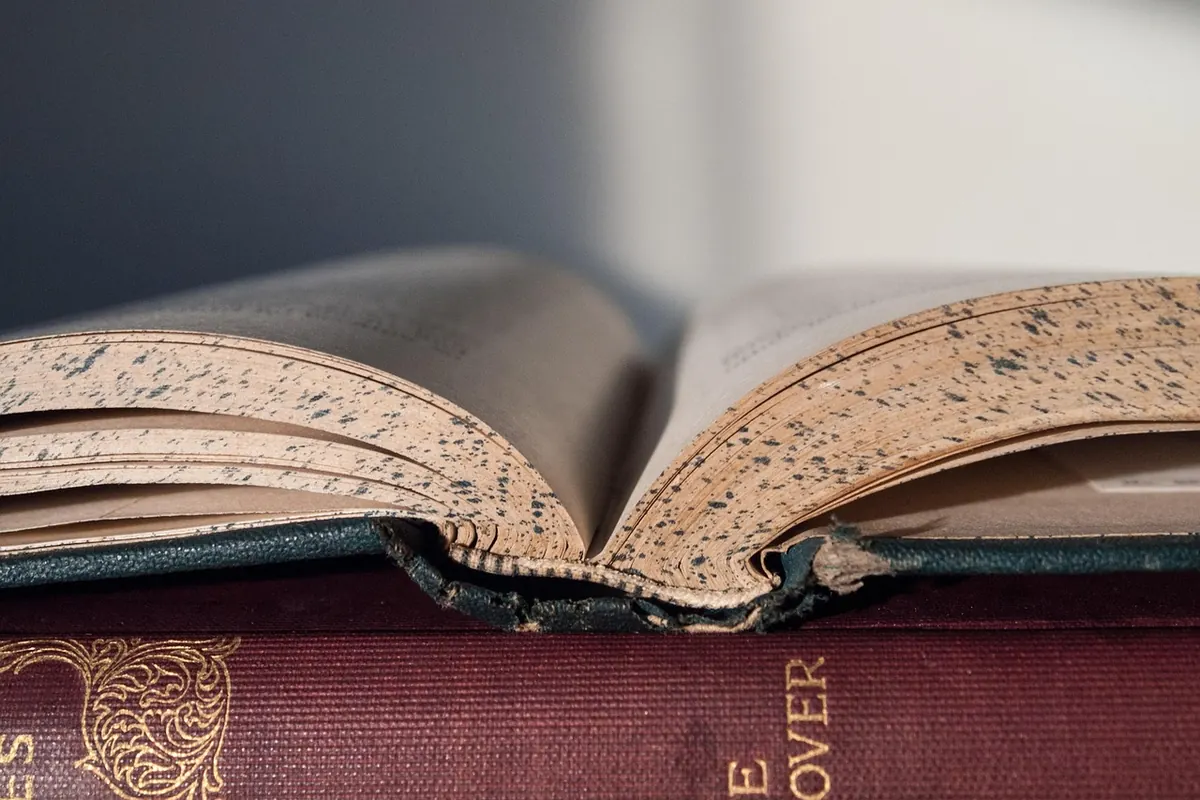
A bookseller lists a 1959 novel as a first edition. The copyright page says "First published 1959", which looks conclusive. Then you notice a number line reading 5 4 3 2, and the asking price is either a bargain or an insult depending on which of you has read it correctly.
"First edition" is one of the loosest terms in the book trade. It gets applied to the first printing, the first British printing, the first paperback, and sometimes to whatever the seller hopes you will accept. The good news is that the answer is usually printed in the book itself, on a single quiet page that most readers never look at twice. You just need to know which lines matter.
The copyright page is where the evidence lives
Open the book at the title page, then turn it over. That reverse side — the copyright page, sometimes called the verso of the title page — is the part that decides arguments. It normally carries the publisher's name and address, the date of publication, an edition statement, a printing history and, in modern books, an ISBN or a printing code.
Start by comparing dates. On a true first edition the title page and the copyright page should agree, or at least not contradict each other. A title page dated 1961 with "First published 1958" on the reverse is not a first edition of anything except confusion — it is usually a later impression or a reset edition that kept part of the old wording.
Then read the publication statement carefully. It often looks something like this:
First published in Great Britain 1949 by Jonathan Cape Limited
That single line is the one most often misread. It records when the work first appeared with that publisher. It does not say that the copy in your hands is from that year. Publishers left such lines on the page for decades, through impression after impression, and they are still there in copies printed twenty years later.
Number lines: read them backwards
The number line — a row of digits printed near the bottom of the copyright page — is the most reliable modern indicator of printing. It looks like this:
10 9 8 7 6 5 4 3 2 1
The rule is simple: the lowest number present tells you the printing. If the 1 is there, you are holding a first printing. If the line reads 10 9 8 7 6 5 4 3 2, with the 1 removed, that is a second printing; remove the 2 as well and it is a third, and so on. Publishers delete a digit with each new run, so the line shortens over time. Older copies can therefore have quite short lines, and a book from the 1930s or 1940s may have no number line at all.
Some houses use variations worth recognising:
- Odd-number lines: something like 1 3 5 7 9 10 8 6 4 2. Here the digits are removed in pairs, one odd and one even. The presence of the 1 still means first printing.
- Letter lines: A B C D E, where A marks the first printing. Plenty of publishers have used these, so read the pattern before assuming.
- Year-based codes: a string of dates, for instance 74 75 76 77, where the earliest remaining year indicates the printing.
- Impression statements: plain English, such as "Second impression 1951" or "Reprinted 1953". Common in British publishing, where "impression" was often used in place of the American "printing".
Publisher statements, editions and impressions
The words "first edition" themselves are less helpful than beginners expect. Plenty of British publishers never printed them at all, so their absence proves nothing — you have to work from the printing history. Other houses stated "First edition" proudly on the first printing and quietly dropped the phrase afterwards, which makes it a useful signal when it does appear.
Watch for wording that changes the meaning of the edition:
First edition thus
This means the first edition in that particular form — a new introduction, different illustrations, a fresh translation or a new binding style. It is a genuine edition, but it is not the first edition of the work, and it should not be priced as one.
Revised, second and new editions
These are separate editions with their own first printings. A second edition, first printing, is a legitimate thing to collect. It is simply not the first edition.
Book club and colonial editions
Book club issues, often produced for organisations such as Readers Union or Book Club Associates, can look very similar to the trade edition. They are usually marked as book club editions somewhere, and their jackets often carry no price. Export and colonial editions were printed for overseas markets and are frequently mistaken for the real thing by sellers working from photographs.
Beyond the copyright page: jackets and issue points
The dust jacket is part of the book for most collectors, and on many titles the jacket is worth more than the text block. Check the price on the front flap: a clipped corner or no price at all is a warning sign rather than a verdict, since price-clipped jackets were common practice. Look at the blurbs, the author photograph and any review quotations — publishers updated these between printings, so a jacket that mentions a later book by the author is a strong hint that you are holding a later copy.
Bindings, endpapers and the advertisement pages at the back of the book carry similar information. A list of the author's other titles that includes a book published after your supposed first edition date is a contradiction you cannot argue your way out of.
Common traps that catch beginners
- Treating "First published 19xx" as proof of a first printing. It only records the first publication date.
- Confusing first edition with first printing. They are the same thing only when the edition has run to just one printing.
- Forgetting that a work can have a first British edition, a first American edition and a true first edition — often in different countries.
- Buying from photographs of the title page alone. Insist on a picture of the copyright page and the number line.
- Ignoring ex-library copies with stamps, plates and tape residue, which are rarely worth the price of a clean copy.
- Being swayed by labels such as "collector's edition" or "deluxe edition", which are marketing descriptions rather than edition statements.
- Overlooking facsimile reprints, which deliberately reproduce the original copyright page and can fool a hurried buyer.
A practical routine before you buy
Slow down, and check in the same order every time. Note the title page date, the copyright page date, the edition wording and the number line. Photograph the copyright page and the jacket flaps so you can compare them later. Then look up the publisher's habits for that period using a printed bibliography, a library catalogue or the publisher's own archive, and compare your copy with a verified one wherever you can — a specialist dealer, a collectors' forum or a reference copy in a public library.
If a seller cannot or will not send a clear photograph of the copyright page, treat the description as a claim rather than a fact. A short, polite question about the number line has saved many buyers a great deal of money, and honest sellers are never offended by it. With a bit of practice the whole check takes under a minute, and you will spot the difference between a genuine first edition and an ambitious description long before the parcel arrives.
Photo: MorningbirdPhoto / Pixabay